

Mediterrolio Olive Oil Market Report — Week of July 31, 2026

Join hundreds of olive oil professionals — producers, importers, traders and investors — who receive the Mediterrolio Market Update every Friday morning.
🎁 New subscribers receive: "How to Read an Olive Oil Price Report" — free 12-page PDF guide.
- 🔥 SPAIN'S PRICE SLIDE RESUMES AS THE COUNTRY CONTAINS ITS LARGEST WILDFIRE ON RECORD. Spain's W31 reading (July 30) falls to €3.40/kg, down -5.6% on the week and now -58.5% below July 2025. The price move comes even as the merged Ávila/Madrid "Sierra Oeste" fire — now confirmed as the largest wildfire in Spanish history at over 50,000 hectares — was stabilised on July 29 and the national emergency for Ávila and Madrid lifted on July 30. A fourth heatwave (40°C, six regions on orange alert) and a still-active fire near Nules/Castellón keep supply risk elevated even as spot prices fall on thin summer liquidity. Buyers should treat the price weakness as a trading opportunity, not a signal that 2026/27 supply risk has eased.
- 🇬🇷 DEADLY CRETE WILDFIRES ARE BURNING OLIVE GROVES DURING GREECE'S CATEGORY 4 FIRE-RISK WARNING. Three Greek firefighters died on July 29 battling blazes near Krya Vrysi (Rethymno, Crete) and in the Peloponnese; agricultural land, olive groves and warehouses have been destroyed. Civil Protection has placed large parts of the country — including Crete, the Peloponnese, the Cyclades and Attica — under Very High (Category 4) fire risk through July 31. This is a new and escalating risk factor for Greek 2026/27 Koroneiki supply that was not present a week ago; buyers with Cretan sourcing exposure should request updated grove-damage assessments before committing to Q4 allocations.
- 🇹🇳 TUNISIA'S TARIFF ADVANTAGE IS NOW FINAL, NOT PROPOSED. USTR's Section 301 forced-labor tariffs took legal effect on July 24 at a confirmed 12.5% additional duty for Turkey and Morocco. Tunisia is not among the 60 named economies and reverts to a materially lower pre-IEEPA MFN US duty. With the rule now final rather than a proposal awaiting notice, US buyers can lock in Q4 sourcing models around the confirmed Tunisia-vs-Turkey/Morocco tariff gap.
| Region / Country | Extra Virgin (EVOO) | Virgin (VOO) | Trend |
|---|---|---|---|
| Spain (National · Oleista W31, July 30) | €3.298 – €3.502/kg · avg €3.40 | €3.036 – €3.224/kg · avg €3.13 | ↓ -5.6% on the week · Renewed slide, cheapest origin by a wide margin |
| Italy (National · Oleista W25 — no new reading, 7th week) | €5.60 – €5.93/kg · avg €5.77 | €3.50/kg | ↔ Unchanged · Now well past the point of being a live price |
| Greece (National · Oleista W31, fresh reading) | €3.70 – €3.90/kg · avg €3.80 | €2.80/kg | ↔ Essentially flat · First fresh reading in four weeks |
| Tunisia (Export · ONH · W30, July 20) | €3.58 – €3.84/kg · avg €3.71 | €2.68/kg (Lampant, July 26) | ↔ Confirmed unchanged for a 2nd straight reading |
| Croatia (Istria/Dalmatia) | €13.50 – €16.00/kg (Istria) · €10.00–€13.00/kg (Dalmatia) | — | ↔ Boutique · Peak tourism season direct sales continue |
| Portugal (National · Oleista W27, June 29) | €3.80 – €4.10/kg · avg €3.95 | €3.30/kg | ↔ Unchanged · Ceiling of the bulk-tier group holds, 5th week |
| Turkey (Export · Izmir · W13, stale) | €4.20 – €4.60/kg · avg €4.39 | €3.26/kg | ↔ No fresh reading · Confirmed 12.5% Section 301 US duty (final, since Jul 24) |
| Morocco (Export · Fès-Meknès) | €4.00 – €4.30/kg | — | ↔ Plentiful 2025/26 crop · Confirmed 12.5% Section 301 US duty (final, since Jul 24) |
The Mediterranean wholesale olive oil market resumed its decline this week even as the fire and heat backdrop worsened sharply. Spain's national average fell -5.6% to €3.40/kg (W31, Oleista July 30), a fresh cycle low and now -58.5% below July 2025, remaining by far the cheapest of the four EU/non-EU bulk-tier origins tracked by the MOPI. Greece printed its first fresh reading in four weeks at €3.80/kg — essentially flat against the carried-forward €3.83/kg — while Tunisia's freshest reading (W30, July 20) confirmed unchanged at €3.71/kg for a second straight print, now the clear second-cheapest origin ahead of Greece and Portugal (€3.95/kg, unchanged for a fifth week). Italy carries no new Oleista reading for a seventh consecutive week, holding at €5.77/kg (W25). On trade policy, USTR's Section 301 forced-labor tariffs became final and took effect July 24: Turkey and Morocco face a confirmed 12.5% additional US duty while Tunisia, absent from the 60-economy list, reverts to a lower pre-IEEPA MFN duty — a locked-in structural advantage rather than a pending proposal. The dominant story of the week, however, is fire: Spain's merged Ávila/Madrid blaze is now confirmed as the largest wildfire in the country's recorded history at 50,000+ hectares, stabilised on July 29 with the national emergency lifted July 30, even as a fourth summer heatwave pushed temperatures to 40°C and national burned area surged past 207,000 hectares. In Greece, deadly wildfires on Crete killed three firefighters on July 29, destroyed olive groves near Rethymno, and triggered a Category 4 fire-risk warning across much of the country through July 31 — a fresh and unresolved threat to 2026/27 Greek supply. The EUR held near 1.1480 vs USD. Summer thin-trading conditions remain fully in effect, and the gap between falling spot prices and rising physical supply risk is now the widest it has been all summer.
A structural 60–90 day time-lag separates wholesale corrections from supermarket shelf prices. The data below compares current wholesale "at source" vs. verified retail shelf prices in three key import markets — revealing the margin supermarkets are currently capturing.
All MOPI prices are quoted in EUR. Click a currency to instantly convert all wholesale prices. Rates as of July 30, 2026 (ECB reference).
Mid-market rates ECB July 30 2026: EUR/USD 1.1480 · EUR/GBP 0.8541 · EUR/JPY ≈184.44 · EUR/AUD ≈1.6277. Verify with your bank for transactional use.
Current weather conditions across key producing regions and their impact on the 2026/27 crop cycle. Impact is assessed relative to the current phenological stage — the same weather can be beneficial or harmful depending on what stage the olive tree is at.
Compare two origins side-by-side across price, quality, polyphenols, freight and EU market access. Prices updated for Week 31, July 31, 2026.
Greece finally prints a fresh Oleista reading this week at €3.80/kg — essentially flat against the €3.83/kg carried forward over the previous three weeks — as Italian industrial blenders remain in pause mode. But the real story out of Greece this week is not price: deadly wildfires on Crete near Krya Vrysi (Rethymno) and a separate blaze in the Peloponnese killed three firefighters on July 29, destroyed agricultural land, olive groves and warehouses, and forced hundreds of evacuations. Civil Protection has placed Crete, the Peloponnese, the Cyclades, Attica and other regions under Very High (Category 4) fire risk through July 31, with strong winds grounding aerial firefighting on Crete. Messenia and Laconia Q4 2026 allocations now carry a fresh layer of physical risk on top of the month-long Italian buying pause.
| Region | Wholesale EVOO Price Range |
|---|---|
| Peloponnese (Messenia/Laconia) | €3.70 – €4.00/kg |
| Crete (Chania/Heraklion) | €3.60 – €3.90/kg |
| Lesbos & Aegean Islands | €3.55 – €3.85/kg |
| Premium Organic / Single Estate (Mani, Lemnos) | €4.70 – €5.30/kg |
- Deadly Wildfires on Crete and in the Peloponnese: Three firefighters killed July 29; olive groves, agricultural land and warehouses destroyed near Rethymno, with a Category 4 fire-risk warning in force across large parts of the country through July 31.
- First Fresh Reading in Four Weeks: €3.80/kg (W31) essentially matches the carried-forward €3.83/kg, meaning the month-long Italian blender pause has not materially repriced Greek bulk oil.
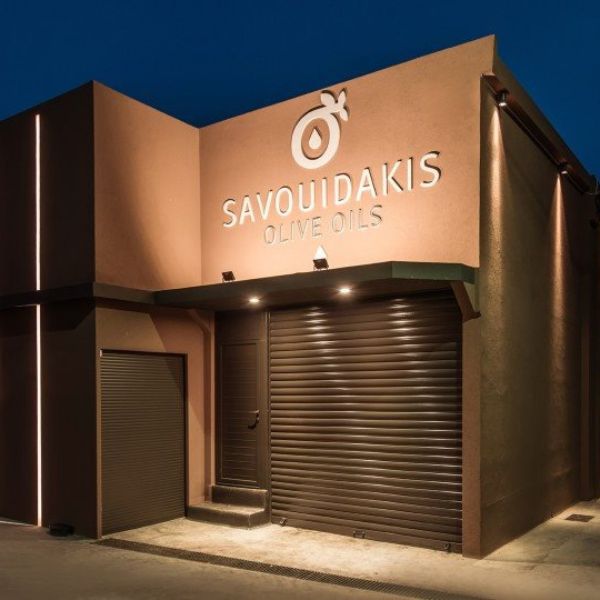
- This Week's Gold Spotlight Is on Crete Itself: Savouidakis Olive Oils (Heraklion) is based on the same island where the wildfires are actively burning groves near Rethymno.
Italy carries no new Oleista reading for a seventh consecutive week, holding at €5.77/kg (W25) — a reference that is now well past the point of being a live price. EU emergency-response authorities have flagged elevated wildfire risk for Italy and Greece in the coming weeks as heat and drought persist, though Apulia itself remains free of active fires for now. With Italian industrial blenders' attention still focused on Greek and Spanish procurement, domestic mill activity remains minimal. The Italy-Greece spread stands at €1.97/kg, comfortably profitable for blenders once trading resumes.
| Region / Prestige Category | Wholesale EVOO Price Range |
|---|---|
| Apulia (Bari/Foggia – Bulk Base) | €5.60 – €5.93/kg |
| Sicily (Val di Mazara / PDO Bulk) | €6.00 – €6.35/kg |
| Tuscany / Umbria (Premium IGP/PDO) | €7.50 – €8.50/kg |
| Calabria (Commercial EVOO Blend Base) | €5.50 – €5.90/kg |
- Reference Price Now Seven Weeks Stale: With no fresh Oleista reading since W25, €5.77/kg carries meaningfully less signal value heading into autumn. Italian mills are expected to resist further declines through summer, but the true current level is genuinely uncertain.
- Elevated Wildfire Risk Flagged for the Weeks Ahead: The EU has warned Italy and Greece both face heightened wildfire risk as the Iberian and Balkan heat masses persist, even though no active Italian olive-growing fires are reported this week.
- US Tariff Clarity Holds for Italy: Italian EVOO, like all EU origins, remains on the flat 15% US tariff ceiling since July 1 — unaffected by the now-final Section 301 tariffs, which only reshape the picture for non-EU origins.
Spain's wholesale market resumed its decline this week, falling -5.6% to €3.40/kg (W31, Oleista July 30), a fresh cycle low. Spain remains by far the cheapest of the four EU/non-EU bulk-tier origins tracked by the MOPI. The price move comes even as Spain confirmed and then stabilised the largest wildfire in its recorded history — a merged blaze near Ávila and Madrid that burned over 50,000 hectares, forced roughly 60,000 evacuations and damaged the Madrid Deep Space Communications Complex, before being contained on July 29 and the national emergency lifted on July 30. A fourth heatwave of the summer pushed six regions to 40°C on July 29, and a separate fire near Nules/Castellón remains active. National burned area has surged past 207,000 hectares, nearly five times the 20-year average.
| Agricultural Hub | Wholesale EVOO Price Range |
|---|---|
| Jaén (Principal Co-op Market Baseline) | €3.30 – €3.70/kg |
| Andalusia (Regional avg, W30) | €3.79/kg (sub-regional, unchanged) |
| Catalonia (Siurana / Premium Arbequina) | €4.10 – €4.50/kg |
- Renewed Slide to a Fresh Cycle Low: Spain's W31 reading falls -5.6% to €3.40/kg, erasing last week's stabilisation and now -58.5% below July 2025.
- Largest Wildfire in Spanish History, Now Stabilised: The merged Ávila/Madrid fire burned over 50,000 hectares before being brought under control on July 29; the national emergency for Ávila and Madrid was lifted July 30, allowing evacuees to return.
- Fourth Heatwave of the Summer: Temperatures reached 40°C in six regions on July 29, with a separate fire near Nules/Castellón still active and a new fire near the Portuguese border forcing further evacuations.
- US Tariff Question Resolved for Spain: Spanish EVOO remains on the EU-US deal's flat 15% ceiling since July 1 — unaffected by the now-final Section 301 tariffs.
Portugal holds unchanged at €3.95/kg for a fifth straight week (W27, June 29 reading carried forward). With Spain at €3.40/kg, Tunisia at €3.71/kg and Greece at €3.80/kg, Portugal remains the clear ceiling of the bulk-tier group by an even wider margin than last week. Blenders seeking the cheapest EU-origin EVOO this week turn first to Spain, then Tunisia, then Greece, with Portugal remaining the most expensive by a wide and stable margin. A new fire near the Spanish border prompted the evacuation of around 600 people this week as Portugal feels the edge of the same Iberian heat mass.
| Region | Wholesale EVOO Price Range |
|---|---|
| Alentejo (Super-Intensive / Modern Estates) | €3.80 – €4.05/kg |
| Trás-os-Montes (Traditional Mountain Groves) | €4.10 – €4.45/kg |
| Centro / Ribatejo (Blended Commercial Base) | €3.90 – €4.15/kg |
Turkish EVOO holds at €4.39/kg (W13, no update this week). Turkey now trades above every other tracked origin except Portugal following Spain's renewed decline. Izmir continues under stable, favourable 2026/27 fruit growth conditions, keeping Memecik and Ayvalık on track for a strong quality outlook, but the confirmed development this week is trade policy: Turkey's 12.5% Section 301 US duty is now final and in effect since July 24, no longer a proposal.
Morocco continues trading at €4.00–€4.30/kg. Dam infrastructure remains near 45% of national capacity. Normal fruit development conditions persist across Fès-Meknès and Marrakech-Safi. Morocco's 12.5% Section 301 US duty, alongside Turkey's, is now confirmed and in effect since July 24 — a finalised new consideration for its US landed-cost profile, even as its non-EU, non-quota market positioning continues to attract supply-chain diversification interest elsewhere.
Tunisia's freshest confirmed reading (W30, July 20 update) holds unchanged at €3.71/kg for a second straight print, keeping it the clear second-cheapest bulk-tier origin behind Spain. The notable development this week isn't price but trade policy, now settled rather than pending: USTR's Section 301 forced-labor tariffs took legal effect July 24, and Tunisia does not appear anywhere on the finalised 60-economy list that includes Turkey and Morocco at a confirmed 12.5% additional duty. Tunisian EVOO now has a confirmed, materially lower US landed cost than its North African and Turkish counterparts — a structural advantage that is locked in rather than awaiting final notice.
Croatia operates entirely in its boutique premium tier, detached from bulk price dynamics. Peak summer tourist season remains fully active — the primary commercial window for Croatian estate producers, with direct-to-visitor sales continuing to drive revenue ahead of the autumn competition cycle. No active wildfires have been reported in Croatia's olive-growing regions this week, in contrast to the situation across Spain and Greece.
| Producing Region | Wholesale EVOO Price Range |
|---|---|
| Istria Peninsula (Ultra-Premium / High Polyphenol) | €13.50 – €16.00/kg |
| Zadar / Northern Dalmatia (Boutique Cooperatives) | €11.00 – €13.00/kg |
| Southern Dalmatia & Islands (Traditional Hand-Picked) | €10.00 – €12.50/kg |
Polyphenols are the key health-active antioxidants in EVOO. EU health claim threshold: 250 mg/kg. QvExtra!'s consumer certification (launched June 2026) keeps polyphenol documentation commercially valuable heading into the new campaign. Click any origin to see full details.
While the Mediterranean basin remains the centre of global olive oil production, Southern Hemisphere and Middle East origins continue to gain market share. The following overview tracks key non-Mediterranean origins monitored by the MOPI for the week of July 31, 2026.
Algeria's projected 2025/26 output of roughly 150,000 tonnes against average domestic consumption of ~81,000 tonnes continues to imply a meaningful exportable surplus, yet actual exports remain a fraction of that potential — only around 1,000-1,200 tonnes shipped in the strongest recent seasons, roughly 1% of production. French imports from Algeria have nonetheless been growing at a 67% annual rate, reaching 735 tonnes in 2024, as organic certification, GlobalGAP and EU phytosanitary documentation gradually fall into place. Algeria is now formally confirmed among the 60 economies subject to USTR's finalised Section 301 forced-labor tariff (effective July 24) — a settled, not proposed, consideration for the small but growing US-bound volume. First larger-scale EU consignments remain expected in H2 2026.
Syria's post-transition recovery in olive oil exports continues, with the country having attended the IOC's Lisbon Council of Members session as an observer. Northwest Syrian EVOO (Idlib/Aleppo) continues trading at approximately $4.80–$5.30/kg. Government free-market reforms are advancing, though logistics and certification infrastructure remain under reconstruction. Enhanced chain-of-custody due diligence remains essential for any commercial engagement.
Argentina's April–June 2026 harvest is fully complete, with the fresh vintage moving into steady distribution as the counter-seasonal window for Northern Hemisphere buyers remains open. Export values remain strong year-on-year, though rising domestic production costs are an emerging watch item for margins heading into the next planting cycle. Mendoza Arauco lots (700+ mg/kg polyphenols) remain the global ultra-premium benchmark at $7.00–$11.00/kg. Argentina's finalised 12.5% Section 301 duty is now in effect, though the country remains a minor US EVOO exporter relative to its Asian and European buyers.
Australia's March–June 2026 harvest has concluded, with AOA-certified lots from South Australia and Victoria moving through the fresh-oil marketing window. National production is holding near 20,000–21,000 tonnes — the second-highest level since 2021/22 — while exports have climbed to their strongest point in three years as buyers diversify beyond Europe. Primary export focus remains Japan, China and South Korea; Australia's finalised 12.5% Section 301 duty is now in effect, a minor consideration given the limited scale of its US-bound EVOO trade.
With the EU-US trade deal in place since July 1, EU olive oil pays a flat 15% all-inclusive US tariff, insulated from the now-final Section 301 forced-labor tariffs. For non-EU competitors, the finalised rule confirms a split field: Tunisia reverts to a materially lower US duty (absent from the 60-economy Section 301 list), while Turkey and Morocco face a confirmed 12.5% rate — a settled, not pending, picture for the competitive gap that has favoured California COOC-certified EVOO in the domestic premium segment through much of 2026. EUR/USD holding near 1.1480 keeps the effective landed cost for US buyers of EU-origin oil broadly stable week-on-week. California producers have 2025/26 lots on market at $8.00–$15.00/kg COOC-certified.
IOC's first formal 2026/27 production estimates (June 2026 Council meeting), set before the worst of this summer's Spanish and Greek fire and heat damage. Global production 2025/26: ~3.44 million tonnes (IOC estimate).
Southern Hemisphere origins are counter-seasonal to the Mediterranean; their 2026 harvests concluded through Q2 and are now moving through the fresh-vintage marketing window while Mediterranean supply enters its leanest pre-harvest months. IOC 2026/27 estimates were set before this month's Spanish wildfire/heatwave and Greek Crete wildfire damage; the October aforo will show how much of the projected Spanish and Greek recovery holds. US tariff figures for EU origins reflect the EU-US trade deal's flat 15% all-inclusive ceiling, unaffected by the now-final Section 301 forced-labor tariffs.
Calculate the full landed cost of bulk EVOO from any Mediterranean origin to your destination. Prices updated for Week 31, July 31, 2026. Note: USTR's Section 301 forced-labor tariffs are now final and in effect since July 24 — EU-origin oil stays on the EU-US trade deal's flat 15% all-inclusive ceiling (effective since July 1, 2026), Tunisia reverts to a lower pre-IEEPA MFN duty (confirmed, not on the Section 301 list), while Turkey and Morocco face a confirmed 12.5% additional duty.
Historical Price Context (July 2026 vs. July 2025)
| Market Benchmark (EVOO Bulk) | Current Price (July 2026) | Historical Price (July 2025) | Year-over-Year Change |
|---|---|---|---|
| Spain (Jaén Baseline) | €3.40/kg | €8.20/kg | ↓ −58.5% |
| Italy (Bari Bulk) | €5.77/kg | €9.10/kg | ↓ −36.6% |
| Greece (Chania Average) | €3.80/kg | €6.90/kg | ↓ −44.9% |
| Tunisia (Sfax Export) | €3.71/kg | €6.50/kg | ↓ −42.9% |
| Portugal (Alentejo) | €3.95/kg | €6.30/kg | ↓ −37.3% |
| Global Benchmark (IMF/FRED, latest available) | ~$6,150/tonne | ~$9,200/tonne | ↓ −33.2% |
July 2025 figures reflect the last verified same-period readings available; treat as indicative where noted.
| Risk Factor | Impact Level | Mitigation Strategy |
|---|---|---|
| Spain Renewed Price Decline — W31 falls -5.6% to €3.40/kg even as the country's largest wildfire on record was contained; the price move looks more like thin summer liquidity than an easing of underlying risk | High | Treat the falling spot price as a possible buying opportunity rather than a signal that supply risk has receded. Consider staggered forward commitments and watch the next 1-2 Oleista readings. |
| Spain Wildfire & Heat Damage (Record-Breaking) — largest wildfire in Spanish history (50,000+ ha) now contained; national emergency lifted; fourth heatwave (40°C) and 207,000+ ha burned nationally, nearly 5x the 20-year average | High | Continue accelerating 2026/27 forward-contract discussions with Spanish cooperatives regardless of this week's spot-price decline. Request updated grove-damage assessments from affected regions. |
| Greece Crete/Peloponnese Wildfires (New This Week) — three firefighters killed; olive groves destroyed near Rethymno; Category 4 fire risk across Crete, the Peloponnese, the Cyclades and Attica through July 31 | High | Request grove-damage assessments from Cretan and Peloponnesian suppliers before finalising Q4 2026 Koroneiki allocations. Monitor Civil Protection updates through the weekend. |
| US Tariff Transition — Section 301 Now Final — confirmed 12.5% duty for Turkey and Morocco, effective July 24; Tunisia confirmed absent from the 60-economy list and reverting to a lower MFN duty; EU origins unaffected on the 15% deal ceiling | Medium | Finalise Q3/Q4 US-bound sourcing models now that the rule is settled rather than proposed. No further USTR notice is required before locking in Tunisian vs. Turkish/Moroccan landed-cost comparisons. |
| Spain–Tunisia Discount Order — the gap has widened back out to €0.31/kg after narrowing to €0.11/kg two weeks ago, underscoring continued volatility between the two cheapest origins | Medium | Avoid over-committing blending ratios to either origin based on a single week's relative pricing. Monitor both Oleista and ONH readings weekly before locking H2 2026 volumes. |
| Tunisia Quota Exhaustion — 9th consecutive year fully allocated; IPR route required for EU-destined volumes | High | Confirm IPR contractor relationships for H2 2026 volumes immediately, independent of Tunisia's now-confirmed improved US tariff position. |
| Italy No-Reading Risk — €5.77/kg reference is now seven weeks stale; true current level increasingly uncertain through summer recess | Medium | Treat €5.77/kg as a floor reference rather than a live price. Autumn recovery toward €6.00+/kg remains the base case as packager demand returns; do not extrapolate the summer stand-down into 2026/27 pricing assumptions. |
| Summer Thin-Trading & Wildfire Logistics Risk — July–August recess suppresses supply across all origins; road, rail and airport disruption from Spanish and Greek wildfires adds a further logistics layer | Medium | Finalise all Q3 2026 procurement decisions this week where possible. Confirm alternate routing with forwarders for any shipments transiting affected regions in Spain or Crete. |
- Price and Physical Risk Have Decoupled in Spain: A record wildfire being contained and the national emergency being lifted did not stop the spot price from falling -5.6% this week — a reminder that thin summer trading can move prices independently of the underlying supply picture.
- Greece's Crisis Is New, Not a Repeat: Unlike Spain's fire, which was already building through July, the Crete and Peloponnese wildfires and the resulting firefighter deaths are a fresh development this week that materially raises the risk profile for Greek 2026/27 supply.
- The Tunisia-Turkey-Morocco Tariff Split Is Now Locked In: What was a proposal last week is now a final, effective rule — Tunisia's tariff advantage over Turkey and Morocco can be built into contracts with confidence rather than hedged against reversal.
- Watch the October Aforo Closely: Both Spain's IOC 2026/27 estimate (~1.55 million tonnes) and Greece's (~240,000 tonnes) were set before this month's fire and heat damage in both countries — the gap between projection and reality will only become clear at harvest.
- Fire Risk Now Spans Two Countries Simultaneously: For the first time this summer, both Spain and Greece are managing active, serious wildfire crises in olive-growing regions at the same time — a clustering that keeps 2026/27 Mediterranean supply risk elevated even during a week when spot prices moved lower.
- Official Benchmarks: International Olive Council (IOC) and EU DG AGRI dashboards.
- Market Indices: Oleista.com (last update July 30, 2026 — Spain W31; Greece W31 fresh; Tunisia W30; Italy W25 stale; Portugal W27 stale) · IOC producer price bulletins · POOLred/Mercacei · Vesper · Certified Origins · Olive Oil Times · Wikifarmer · agrotypos.gr · IMF/FRED Global Olive Oil Price (~$6,150/tonne, latest available).
- On-the-Ground Intelligence: Direct reports from regional agricultural cooperatives in Greece, Spain, and Tunisia.
- Freight Logistics: Aggregated bulk tanker rate trends across key Mediterranean transit corridors.
- FX Rates: ECB Reference Rates (July 30, 2026) and Google Finance. EUR/USD 1.1480 · EUR/GBP 0.8541 · EUR/JPY ≈184.44 · EUR/AUD ≈1.6277.
- Polyphenol Data: Published laboratory CoA results and peer-reviewed cultivar studies.
- Trade Policy: Section 122 of the US Trade Act of 1974 (expired July 24, 2026); EU-US trade deal implementing regulations (Council of the EU, effective July 1, 2026); USTR Section 301 forced-labor investigation final action (announced July 23, effective 12:01am ET July 24, 2026), imposing 10-12.5% duties on 60 economies including Turkey, Morocco and Algeria but not Tunisia.
- Competition & Institutional Data: IOC 26th edition Mario Solinas Quality Award (Northern Hemisphere) winners announced June 18, 2026, Madrid; Berlin GOOA Southern Hemisphere registration; NYIOOC Southern Hemisphere 2026 timeline.
Note: Prices represent wholesale "ex-works" bulk volumes. Retail shelf prices and specific premium estate pricing may vary significantly based on local certification and packaging costs. Where a source has not published a new reading this week, the most recent verified figure is carried forward and flagged accordingly.
Registration for the Berlin Global Olive Oil Awards' Southern Hemisphere edition closes today. Producers registered by the deadline are told to expect results by September 15, 2026 — a fast turnaround well suited to autumn 2026 shelf launches.
The International Olive Council announced the winners of the 26th edition of the Mario Solinas Quality Award (Northern Hemisphere) at a ceremony in Madrid on June 18, 2026, with 122 oils entered from 11 countries including Spain, Greece, Italy, Morocco and Tunisia.
Registration open for producers from Argentina, Australia, Chile, New Zealand, South Africa, with entries due September 1, 2026, linked to the IOC's Southern Hemisphere Mario Solinas edition.
Italy's central food-fraud inspectorate continues to flag irregular declared-vs-actual origin content in a meaningful share of vegetable-oil inspections, following its "Mamma Mia" enforcement action earlier this year. Chain-of-custody documentation and batch-level CoA remain essential for premium importers heading into new-harvest sourcing.
With Section 301's 10-12.5% duties now confirmed and Tunisia, Turkey and Morocco facing three different, settled outcomes, US customs brokers are expected to apply closer scrutiny to country-of-origin documentation for blended oils — keep Certificates of Origin current alongside quality CoAs for any US-bound shipment.
QvExtra!'s June 2026 certification keeps EU polyphenol claim documentation commercially valuable. Request CoA from your accredited lab (Intertek, SGS, ONAOO-panel approved) before the new harvest. Early-harvest Koroneiki, Arauco and high-phenolic Chetoui routinely exceed 250 mg/kg.
Food-grade flexitanks — carrying up to ~24,000L per 20' container, up to 30% more than ISO tanks — remain the preferred format for exporters reaching Asia, the Americas and the Middle East. With Section 301 now final rather than proposed, exporters routing more volume through Tunisia for US-bound business should confirm flexitank capacity and EVOH oxygen-barrier variants with their forwarder ahead of Q4.
Estate direct sales normally peak in Croatia (Istria, Zadar), Greece (Crete, Peloponnese, Attica, the North Aegean) and Italy (Puglia, Sicily, Tuscany) through August. This week, active wildfires are disrupting that window specifically on Crete and in parts of the Peloponnese — producers there should check with regional tourism boards on access before planning visitor events this weekend.
Members can list on Orderchamp (EU) and Faire (global, 700,000+ retailers). Retail buyers are planning autumn 2026 shelf launches now — submit your listings during the summer window so you are discoverable for September ordering.
Reach olive oil importers, producers, traders and investors — the decision-makers who read the MOPI every Friday. Sponsored sections, banner placements and social media mentions available.
Reports are published every Friday. New reports are added automatically each week.