

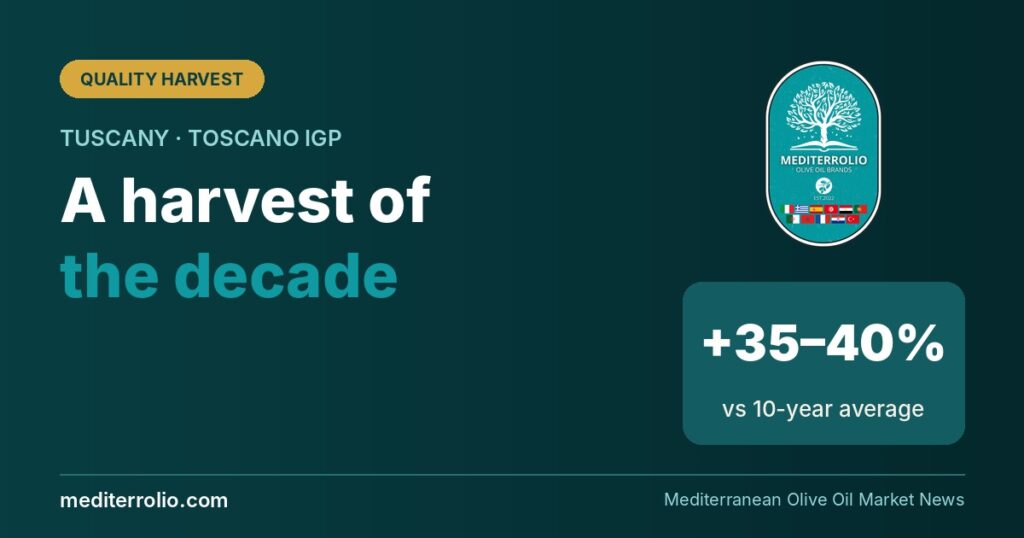
A harvest of
the decade

While Italy as a whole expects a smaller crop, Tuscany is heading for one of its best olive oil seasons in ten years. Toscano IGP output is expected to run 35–40% above the decade average.
The numbers
In mid-October 2026, the Consorzio di Tutela dell'Olio Extravergine Toscano IGP published its first estimates. Production should exceed the last decade's average by 35–40%, with mill yields of about 12%. Consortium president Fabrizio Filippi described the season as important for both quality and quantity.
| Indicator | 2026 season |
|---|---|
| Production vs 10-year average | +35–40% |
| Average yield at the mill | about 12% |
| Wholesale price, Toscano IGP | €10.50–11 per litre |
| Consumer price | €15–16 per litre |
| Consortium members | nearly 8,000 |
| Olive trees in the system | about 7 million |
Why it went well
A hot, dry summer slowed the reproduction of the olive fly. That meant healthier fruit and fewer treatments in the groves. Last season, by contrast, the consortium had estimated only 2,200–2,500 tonnes of IGP oil, well below the 3,500 tonnes of the year before.
A price that holds
Italian EVOO has fallen sharply this year, and the premium of generic Italian oil over EU oil has shrunk. Yet Toscano IGP is holding at €10.50–11 per litre wholesale. Filippi points to rising costs, but describes the market as stable.
The difference is certified, traceable origin. Every Toscano IGP bottle carries an anti-fraud seal from the State Mint and a QR code linking to a digital product passport.
What it means for Mediterranean producers
- Certification protects price. A PDO or PGI with strict rules holds value better than a country name alone.
- Traceability sells. Seals and digital passports give buyers a reason to pay more.
- Weather cuts both ways. The same heat that hurt yields elsewhere kept the olive fly away in Tuscany.